

 Biocontainment
 Biopharma
 Healthcare



 Brochures
 User Manuals


Transforming IV Compounding Via Innovation and Integration
Industry:
Healthcare
Type:
Article
In this new article for Pharmacy Practice News, Product Manager Erith Welch explores what a truly integrated IV compounding environment looks like, and why it matters now more than ever.
Hospital IV compounding has grown increasingly complex as pharmacies respond to advancing technology, stricter regulations, and heightened expectations for safety. Many facilities now rely on a patchwork of outdated or retrofitted equipment layered with new documentation requirements, often making compliance with aseptic standards more difficult rather than easier. The consequences of inadequate IV compounding have been tragically demonstrated, underscoring the urgent need for modernization.
If your pharmacy is navigating outdated equipment or tightening USP standards, we can help.

Example cluttered workspace in today’s compounding environments.
Bulky, add-on equipment frequently overwhelms limited cleanroom space, creating a maze of wires and suboptimal device placement. These conditions complicate daily cleaning, degrade primary engineering control performance, and make adherence to aseptic technique more challenging. For pharmacy technicians, the result is a high-pressure work environment that contributes to fatigue, burnout, and high turnover, driving up training costs and operational strain.
The risks posed by outdated or poorly integrated equipment are amplified by the growing volume and complexity of compounded medications. Many pharmacies still depend on manual processes that are prone to error and inconsistency, even as demand continues to rise.
Insight
Today’s IV compounding conditions complicate daily cleaning, degrade primary engineering control performance, and make adherence to aseptic technique more challenging.
Costly Failures and a Slow Road to Reform
High-profile incidents have revealed the human cost of such shortcomings. The death of pediatric patient Emily Jerry due to a sodium chloride overdose and the 2012 fungal meningitis outbreak linked to contaminated compounded steroids, which killed more than 100 people, exposed serious vulnerabilities in compounding practices. These events spurred regulatory reform, including the 2013 Drug Quality and Security Act, which emphasized standardized practices and rigorous documentation.
Integrating these requirements has proven difficult. Pharmacies historically relied on paper records, and the shift to digital systems has occurred alongside the challenge of fitting additional hardware into already crowded cleanrooms. Poor interoperability among software and hardware platforms has led to inefficient workflows, while legacy systems often resist integration with newer technologies.
For years, IV compounding lagged behind other areas of healthcare in adopting automation. After regulatory changes accelerated innovation, many pharmacies were forced to adapt rapidly, often relying on piecemeal solutions that increased complexity rather than reducing it. A lack of standardization and a clear roadmap for modernization have left many facilities struggling to keep pace.
Modernizing IV Hoods
Modernizing IV compounding is not a matter of convenience; it is essential to patient safety and regulatory compliance. IV hoods, central to sterile compounding, have changed little over decades, despite the high stakes involved. Reliance on outdated designs and manual workflows increases the risk for contamination, dosing errors and patient harm.
Several persistent shortcomings define the current state of IV compounding technology:
- Lack of integration: Many IV hoods operate as stand-alone units, creating data silos that hinder inventory tracking, supply management, and regulatory compliance.
- Manual processes: Hand- performed tasks increase the risk for human error and slow production in high-pressure environments.
- Limited data capture: Without automated electronic records, it is difficult to ensure traceability, analyze trends, or drive continuous improvement.
- Poor ergonomics: Designs that ignore technician comfort contribute to fatigue, injury, and error.
- Exterior components: Hardware components, such as scanners, PCs, cameras, and printers, are wired outside the sterile field. This leads to poor aseptic technique and workarounds.
A Holistic Approach Needed
Addressing these issues requires a holistic approach that unites technology, workflow, training, and data management into a cohesive system. Rather than layering devices onto existing infrastructure, pharmacies need integrated solutions designed specifically for modern compounding demands.
Key elements of such systems include:
- Automated data capture: Real-time documentation improves accuracy, traceability, and compliance while reducing manual entry errors.
- Integrated inventory management: Automated tracking and ordering reduce stockouts and supply chain disruptions.
- Workflow optimization: Software-guided processes minimize unnecessary movement and contamination risk from order entry through dispensing.
- Remote monitoring: Supervisors can oversee operations, identify issues, and provide support without being physically present.
- Improved ergonomics: Thoughtful design reduces strain, supports technician well-being, and enhances aseptic technique through access to the hardware that is being used frequently.
Why it matters
Reliance on outdated designs and manual workflows increases the risk for contamination, dosing errors and patient harm.
Despite technological advances, many U.S. hospitals still lack fully integrated IV workflow solutions. Early efforts to meet documentation requirements often relied on spreadsheets, necessitating the addition of computers in already constrained spaces. As data entry proved cumbersome, scanners were added. Volumetric preparation guidelines then drove the adoption of cameras for photo documentation.
Each regulatory or best-practice update brought new hardware, further crowding cleanrooms and complicating workflows. Meanwhile, automation such as IV compounding robots remains present in less than 10% of facilities, largely due to cost barriers, despite their potential to improve precision and consistency.
New standards continue to emerge. Recent gravimetric requirements demand additional equipment, including scales, peristaltic pumps, and total parenteral nutrition compounders that must interact seamlessly with existing systems. Managing these components has led to the development of IV workflow software, now considered essential in many pharmacies.
The Institute for Safe Medication Practices has emphasized the importance of workflow systems that reduce movement outside primary engineering controls, optimize equipment placement, and discourage multitasking, all to preserve sterility and enhance safety.
Meeting New Standards Through Integration
Successfully navigating these pressures requires minimizing technological fragmentation while maximizing efficiency. Streamlining hardware and integrating new capabilities within a cohesive platform can reduce contamination risk, improve efficiency, and simplify compliance.
An ideal approach consolidates multiple functions into space-efficient systems that integrate primary engineering controls with essential hardware. This allows pharmacy staff to focus on patient care rather than managing equipment constraints.
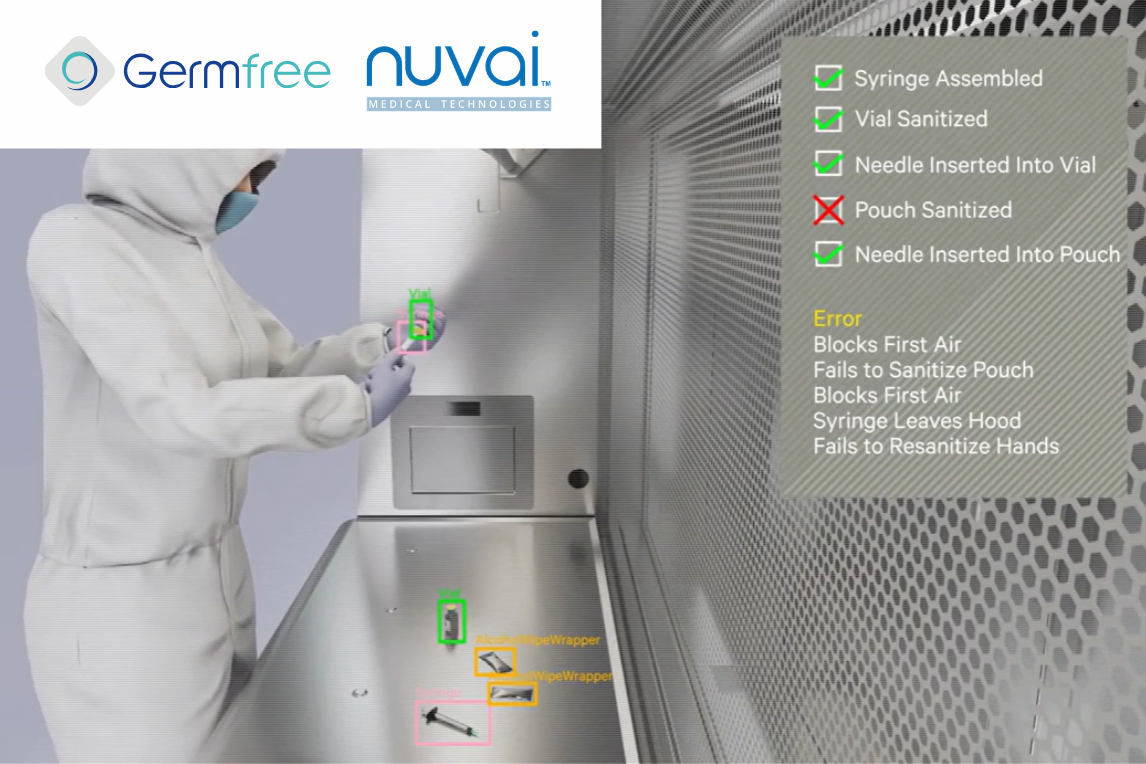
Technology continues to advance and will offer new ways to improve patient care. Recently solutions have started to utilize artificial intelligence monitoring to capture aseptic technique and identify areas improvement that can be missed by limited direct observation alone. New IV hoods should be ready for this technology.
Effective integrated solutions should:
- consolidate hardware, such as cameras, scanners, and printers, into a single, space-saving platform;
- support future expansion to accommodate new technologies and connectivity; and
- streamline compliance through unified documentation and reporting.
Realizing the Benefits
By reducing logistical and technological burdens, integrated IV workflows can improve staff satisfaction and retention, lower training costs, and enhance patient safety. Smarter compounding environments not only streamline operations but also establish a higher standard for pharmaceutical care.
As regulatory expectations and medication complexity continue to evolve, embracing integrated, future-ready solutions will be critical. Pharmacies that invest in innovation and thoughtful system design can reduce risk, improve consistency, and set new benchmarks for safety and efficiency in IV compounding.
Ready to standardize your IV workflow?
See how Smarthood™ helps pharmacy teams prepare every dose safely, consistently, and in full compliance.
You might also be interested in

Rethinking Biomanufacturing: How Modular Infrastructure Is Accelerating the Future of Advanced Therapies
When Every Minute Matters: Reliable Containment for Ebola Response
A Guide to Airflow Design Models in Cleanrooms
Contact us: Let's unlock your scientific potential together
Complete our contact form and a member of our commercial team will contact you within 24 hours.

Sales: + 1 (386) 265-4300


