

 Biocontainment
 Biopharma
 Healthcare
 Brochures
 User Manuals


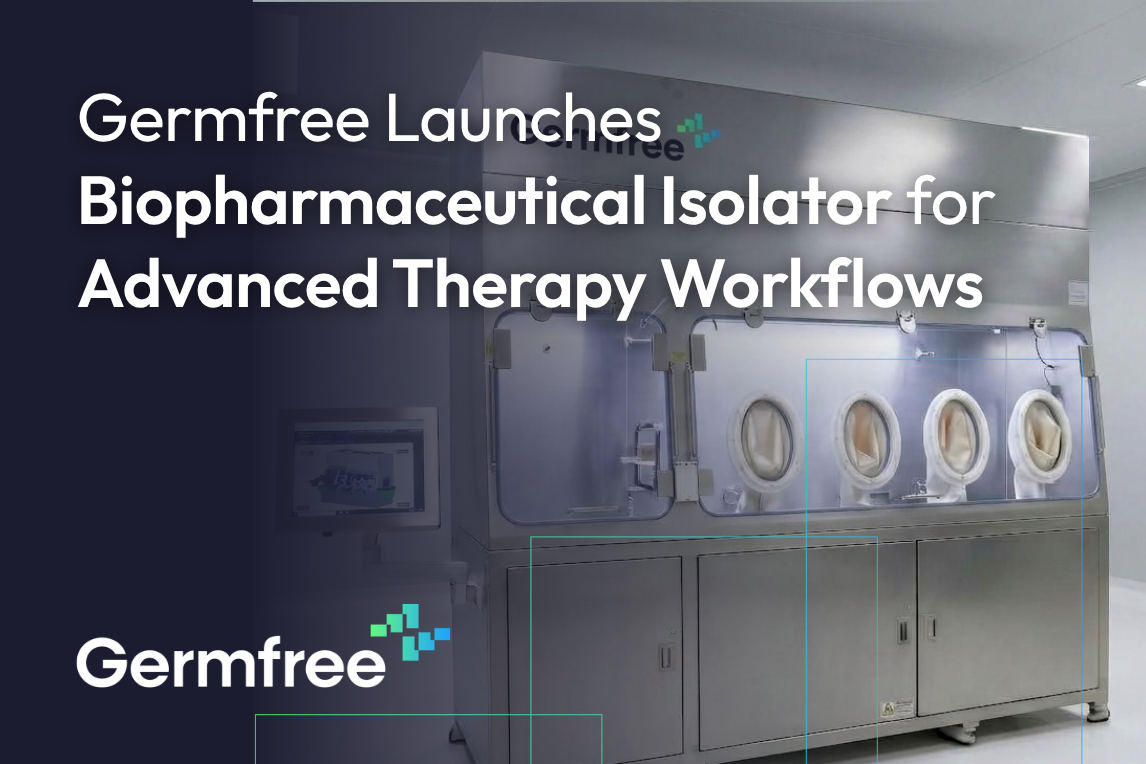
Beyond the Blueprint: Practical Infrastructure for Cell Therapy Manufacturing
Industry:
Biopharma
Type:
Article
By Forrest Brown, Chief Strategy & Services Officer, Germfree
As programs advance through clinical stages, the environments that enable them increasingly shape whether therapies can be produced efficiently and reach patients at scale.
Cell and gene therapies (CGTs) are advancing faster than the facilities that manufacture them. As developers move from early clinical work towards commercial reality, modular, mobile and closed-system infrastructure is becoming central to manufacturing speed, regulatory readiness, and patient access. Both regulators and developers are making strides to bring these life-changing therapies to the patients that need them most.¹
As of early 2026, thousands of advanced therapy medicinal product (ATMP) candidates were in development globally across oncology, autoimmune disease, rare genetic disorders, and other therapeutic areas. Within that landscape, genetically modified cell therapies such as CAR-T remain one of the most active areas of clinical development. ²⸍³ Nonetheless, the infrastructure required to translate these therapies into accessible and scalable treatments remains a major bottleneck. Facilities take time to build, must adapt as processes mature, and need to reflect the practical realities of ATMP manufacturing from the outset.

A therapy unlike any other
Cell therapies require a different infrastructure mindset because they are not conventional biologics. They are living, and in many cases, patient-derived products produced in small batches under time pressure to treat rapidly progressing disease. In this environment, manufacturing conditions are not just a backdrop to the science; they are a direct determinant of product quality, release timing, and patient outcome. The gene-modified cell therapy field broadly divides into two manufacturing paradigms—autologous and allogeneic therapies, shown in Figure 1 below.
Autologous therapies use a patient’s own cells, which are collected, shipped to a manufacturing site, genetically modified, expanded, and then returned for infusion. This model introduces a time-sensitive chain of custody in which manufacturing delays can have direct clinical consequences. In CAR-T therapy, the “vein-to-vein” interval from leukapheresis to reinfusion has historically been measured in weeks, and efforts to compress that timeline are now central to process design, manufacturing strategy, and arguably even therapeutic effectiveness.⁴ For autologous products, the challenge is to scale-out, not to scale-up: repeating a precise validated process across multiple suites, shifts, or sites without introducing variability.
Allogeneic therapies follow a different commercial logic. They rely on healthy donor-derived starting material and aim to create off-the-shelf products that can reach broader patient populations, often using manufacturing models that more closely resemble conventional biopharmaceutical production. Even so, they still require stringent aseptic control, reliable segregation strategies, and infrastructure that can adapt as products move toward commercial manufacturing.

Figure 1: Autologous and Allogeneic Cell Therapy
The cGMP and biosafety design challenge
A defining challenge in ATMP facility design is the need to reconcile product protection with personnel and environmental protection. cGMP cleanrooms are designed primarily to protect the product by minimizing particulate and microbial ingress. EU GMP Annex 1, reinforced by ISO cleanroom principles, emphasizes contamination control strategies, environmental classification, and the use of technologies such as barrier systems and closed processing where appropriate.⁵ In many cleanroom designs, airflow cascades outward from the most critical classified zones to adjacent lower-classification areas in order to protect the process.
Biosafety containment often drives the opposite pressure philosophy. Viral vectors and genetically modified materials used in cell therapy manufacturing can require BSL-2+ or equivalent containment measures intended to protect operators and the surrounding environment. In these settings, inward airflow and suite containment may be needed so that potentially hazardous materials do not escape controlled spaces. Multi-product facilities add a third requirement: cross-contamination control between adjacent manufacturing operations.
ATMP facilities therefore often rely on risk-based hybrid solutions such as sink anterooms, independently controlled HVAC zones, dedicated air handling for production suites, pressure segregation, and carefully designed material and personnel flows. The underlying design question is consistent: how can a facility contain the process without compromising aseptic assurance? In January 2026, the FDA announced greater flexibility in requirements for cell and gene therapies, signaling a more tailored approach to these manufacturing realities. ¹⸍⁶
The underlying design question is consistent: how can a facility contain the process without compromising aseptic assurance?
The growing role of modular and mobile infrastructure
Traditional biopharmaceutical facilities are often built as fixed, long-horizon assets. Cell and gene therapy introduces a different reality: compressed clinical timelines, evolving process platforms, uncertain scale assumptions, and a constant need to preserve optionality. Under those conditions, infrastructure speed and flexibility become strategic capabilities rather than secondary operational concerns.
Conventional cGMP cleanroom construction at meaningful scale typically takes 18 to 30 months. At current industry benchmarks, full-system biopharmaceutical cleanroom build costs include HVAC, building management systems, environmental monitoring, process utilities, electrical infrastructure, and commissioning, qualification and validation (CQV) depending on scope and location. Modular construction at this scale does not necessarily reduce headline unit cost, but it does improve schedule, predictability, and quality risk. By moving cleanroom fabrication into a controlled factory environment, modular construction allows cleanroom production to proceed in parallel with site preparation and shell work, while factory acceptance testing reduces on-site CQV burden.⁷
Mobile cGMP infrastructure extends the same logic further. Trailer-based and transportable cleanrooms can be deployed directly to clinical sites and operated as point-of-care or near-patient manufacturing capacity. In one deployment at a US academic cancer center, a mobile cGMP suite enabled point-of-care viral vector manufacturing for a hospital client whose existing facility had neither the floor area nor the segregation infrastructure required to support dedicated viral vector production in-house. The platform created compliant segregated capacity that the institution could not readily build into its legacy footprint, while supporting development of the center’s in-house CAR-T pipeline. For autologous therapies, distributed manufacturing closer to the patient is no longer theoretical.

Mobile cGMP Cleanroom Platform by Germfree
Modular and mobile platforms do not typically beat stick-built facilities on headline per-square-foot cost; the economics emerge through schedule compression, parallel execution, factory-controlled quality, and operational flexibility. On the contrary, transport logistics, ceiling height, utility tie-ins, and site access can constrain certain modular and mobile configurations. In practice, the decision often comes down to how heavily speed-to-clinic, quality certainty, and patient proximity weigh against initial unit-cost. For many CGT programs, the first factors increasingly dominate.
Closed systems and automation
Whatever the physical format of the facility, the process architecture inside it increasingly revolves around closed systems. Because cell therapy products cannot be terminally sterilized or filtered, contamination control during manufacture is essential. Closed processing reduces operator intervention, limits environmental exposure, and can in some cases support operation in lower-classified surrounding cleanroom environments when justified through a sound contamination control strategy.⁵ Lower surrounding classifications can reduce HVAC demand, gowning burden, cleaning intensity, and environmental monitoring requirements. The benefit is not only simplicity and reduced cost, but also a shift away from broad room-based controls into tightly engineered process containment. Isolator technology can be particularly favorable where closed processing is not possible and a higher-classification cleanroom is not feasible.
Automation is a natural extension of that trend. In manual cell therapy workflows, operator-dependent variability remains a common source of deviation. Automated or semi-automated closed systems can improve reproducibility, standardize execution across sites, and generate the process data needed for more advanced control strategies. Automation is not universally the right answer, however; it requires greater upfront capital and may reduce flexibility in early stages of process development.
Automated or semi-automated closed systems can improve reproducibility, standardize execution across sites, and generate the process data needed for more advanced control strategies.
Planning with commercial intent
One of the most persistent infrastructure mistakes in CGT is designing too narrowly around the present moment. Research-oriented spaces that work in early development can become liabilities when a product moves toward pivotal studies or commercial launch. Qualification strategies deferred too late can create downstream delays, and environmental monitoring programs may be difficult to justify during regulatory review if they were not designed with eventual cGMP expectations in mind.
Planning with commercial intent does not mean overbuilding from day one. It means making early facility decisions that preserve future pathways, including layouts that support likely process flows, utility and HVAC strategies that can accommodate expansion, and CQV planning aligned with the product’s development arc. Facility decisions echo through tech transfer, comparability, regulatory submissions, batch records, operator training, and supply reliability.
Infrastructure and patient access
Infrastructure choices undoubtedly influence patient access. Autologous CAR-T therapies can exceed $500,000 per patient when total cost of care is considered, and manufacturing complexity is one contributor to that burden.⁸ The cost and geography of production affect where therapies can be offered and how far patients and materials need to travel.
Better infrastructure alone will not solve access, but it is part of the solution. Modular construction can reduce timelines, closed and automated systems can improve consistency, and point-of-care or near-patient manufacturing can reduce logistics friction in autologous workflows. These are not just engineering choices; they are commercial and patient-access decisions embedded in the built environment.
The science of cell therapy has advanced rapidly, and the infrastructure supporting it is evolving in parallel. In cell therapy, infrastructure is part of the platform. The facilities that succeed will be those designed not only to meet current requirements, but to absorb process change, support regulatory compliance, and enable therapies to reach patients more efficiently.
European Biopharmaceutical Review, Summer 2026, pages 46-48. © Samedan Ltd.
Resources
- Visit: https://www.fda.gov/vaccines-blood-biologics/cellular-gene-therapy-products/flexible-requirements-cell-and-gene-therapies-advance-innovation
- Visit: https://www.asgct.org/uploads/files/general/Landscape-Report-2026-Q1.pdf
- Visit: https://www.isctglobal.org/publications/regulatory-quality-initiatives/global-regulatory-report/global-regulatory-report-2025
- Visit: https://www.ashpublications.org/bloodadvances/article/9/11/2663/535370/Impact-of-vein-to-vein-time-in-patients-with-R-R
- Visit: https://health.ec.europa.eu/system/files/2022-08/20220825_gmp-an1_en_0.pdf
- Visit: https://www.fda.gov/news-events/press-announcements/fda-increases-flexibility-requirements-cell-and-gene-therapies-advance-innovation
- Visit: https://www.deloitte.com/us/en/services/consulting/articles/greenfield-manufacturing.html
- Visit: https://www.cancer.org/cancer/managing-cancer/treatment-types/immunotherapy/car-t-cell.html
Forrest Brown serves as Chief Strategy and Services Officer at Germfree, leading enterprise growth strategy and global services. Working closely with the CEO, Forrest connects strategic vision with disciplined execution across cGMP manufacturers, pharmacies, health systems, and research institutions. Forrest oversees Germfree’s lifecycle services portfolio, spanning commissioning, qualification, compliance, and modernization, ensuring seamless, end-to-end support.

You might also be interested in
Rethinking Biomanufacturing: How Modular Infrastructure Is Accelerating the Future of Advanced Therapies
When Every Minute Matters: Reliable Containment for Ebola Response
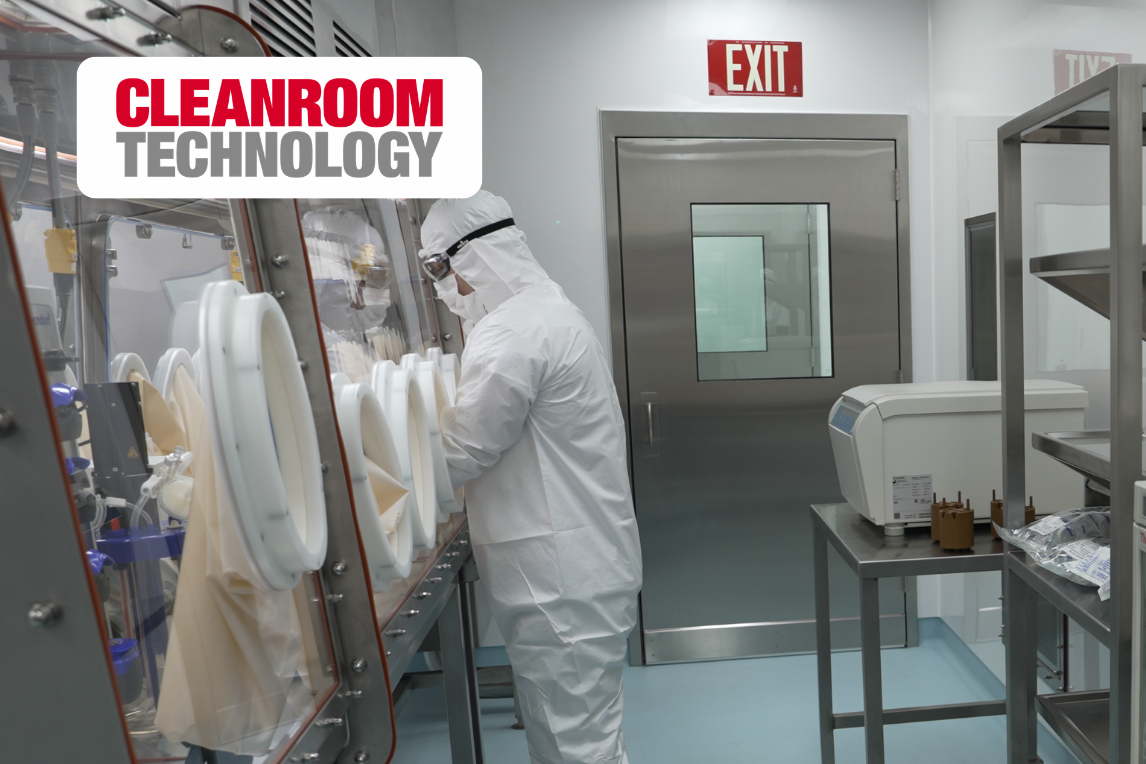
A Guide to Airflow Design Models in Cleanrooms
Contact us: Let's unlock your scientific potential together
Complete our contact form and a member of our commercial team will contact you within 24 hours.

Sales: + 1 (386) 265-4300


