

 Biocontainment
 Biopharma
 Healthcare
 Brochures
 User Manuals



Acryloyl panels are built from the same isotropic, solid core composite throughout: impermeable, fully submersible, and chemically neutral, with Living Building Challenge Declare Label 3.1 and HPDC certification. Acryloyl stands as the most versatile, cost-effective primary barrier system in the Arcoplast range, with A-1010 Bio-Seal and A-2020 adhesive chemically welding the panels into a seamless, single membrane barrier.
Walls, ceilings and linings
Acryloyl


Engineered Polymer Wall Paneling System
The panel’s surface carries a high light reflective value, 99.8% at an 85 degree source angle, a detail A&E design teams often use to specify fewer light fixtures and, in turn, fewer penetrations in the barrier.
That combination of durability and design flexibility has given Acryloyl a working history across a wide range of industries, including controlled environments, cleanrooms, biosecurity and biosafety laboratories, science research facilities, health care, pharmaceutical production, vivariums, and food and beverage plants.
Acryloyl Overview
Key features
- Accidentally damaged surfaces are easily repaired in situ, on-site
- Acryloyl does not, delaminate, shed, blister or flake
- Acryloyl is antimicrobial, does not support microbial growth
- Acryloyl RF tested
Seismic tests
- Full scale room fire: ISO 9705 Annex B
- Reaction to fire. EN 13501-1–Europe, Asia
- UPITT Protocol Toxicity: MEA 64-96-M
- Surface burning: Canada. UL S-102
- Surface burning: USA. ASTM E-84
- Vertical burning: UL 94–5VA 500W


Wall to Ceiling Junction On site, a single application of A-1010 Bio-Seal chemically welds Acryloyl panels together, sealing and finishing them into a continuous, single membrane primary barrier.
Panel to Panel Joint A-1010 Bio-Seal: Infill joint. easy to clean, impermeable, antimicrobial, does not support the growth of fungus, mildew, mold or bacteria.
Wall to Floor Transitions The seamless air water tight joint, between two wall panels and the coved floor surface was created in a single application using A-1010 Bio-Seal finishing compound.
Arcoplast Acryloyl: Engineered polymer wall paneling system, interfaces with a seismic expansion joint
Installation
Most Acryloyl wall and ceiling installations require no pre-engineering. Panels install using a dry construction method, eliminating the need for on-site preparation like sanding, painting, surface coatings, or long drying times. Ready to install panels carry no trapped contaminants from on-site work, and a small, well trained crew can install a primary barrier to the highest level of containment quickly, with minimal dust and waste.
- Back plate lining system (6.5mm, 9.5mm, 12.5mm): Panels and back plates attach directly using A-2020 structural adhesive, with A-1010 Bio-Seal sealing and finishing the joints and seams. Fasteners secure the back plate or spline to the substrate or framing without penetrating the barrier surface. Confirm the surface is clean and able to support new panels before attaching.
- Spline system (9.5mm, 12.5mm, 19mm): Seismic and non-seismic corner and wall splines position panels using fasteners and VHB tape, with A-2020 adhesive bonding the panels and spline assembly to the framing. A-1010 Bio-Seal finishes the joints, forming a seamless, single membrane barrier.
- Direct attach: Fixtures and MEP devices attach directly to the barrier using A-2020 adhesive and A-1010 Bio-Seal, aided by fasteners and brackets as needed. Once fixed, a fixture can only be removed by cutting the panel.
- Penetrations: A-1010 Bio-Seal forms an air and water tight, seamless seal around any penetration in the barrier.
- Repair: Accidental damage can be repaired on site, restoring the barrier to new condition.

Acryloyl: 12.5mm PANEL KERF

CORNER ASSEMBLY: A-1010, A-2020

SEISMIC WALL SPLINE ASSEMBLY: A-1010, A-2020
Engineered for a Hygienic Surface
Primary barriers with an ultra smooth surface, an Ra of 0.8μm or less, minimize microbial attachment, reducing the risk of contamination and supporting more efficient cleaning, decontamination, and sterilization.
ISO 4287.23, the international standard for hygienic design, sets that same benchmark: a surface roughness of Ra 0.8μm or less. Bacteria typically attach to surfaces through one of four methods, attachment, adherence, adhesion, or entrapment, and rougher surfaces create a stronger attachment force. A biofilm of extracellular polymeric substances, for example, is far less likely to take hold on a surface at or below that Ra threshold.
Surface Topography
| Surface Topography | Acryloyl | GFRMC | GFRP |
|---|---|---|---|
| Ra*: Roughness Average | 0.020 μm | 0.01 μm | 0.082 μm |
| Rq: Roughness, root mean square average | 0.03 μm | 0.02 μm | 0.135 μm |
| Rz: Average Maximum Height of the Profile | 0.16 μm | 0.013 μm | 0.817 μm |
| Rp: Maximum Profile Peak Height | 0.09 μm | 0.07 μm | 0.604 μm |
| Rv: Maximum Profile Valley Depth | 0.07 μm | 0.06 μm | 0.213 μm |
| Rt: Maximum Height of the Profile | 0.21 μm | 0.18 μm | 2.384 μm |
Applications
Science is constantly evolving, and cleanrooms have to keep pace, supporting a wide range of applications within demanding environments built for one purpose, or in many cases, several at once. The monolith construction of a room inside a room has proven to be the most effective system for cleanrooms and high containment laboratories to date, and Arcoplast has extended that approach further, with seamless penetrations and panel joints forming a true single membrane primary barrier.
Acryloyl single membrane primary barriers are available as dedicated or hybrid systems, each offering distinct advantages depending on the application and working environment. Together, they open up new possibilities for how primary barriers get designed.
Controlled Environments
Cleanrooms
Biosecurity/ Biosafety Laboratories
Science Research Facilities
Healthcare
Pharmaceutical Production
Vivariums
Food & Beverage
Additional information
Dedicated vs. Hybrid Approach
Dedicated: A primary barrier built from a single panel system. Acryloyl dedicated barriers are isotropic, chemically neutral, fully submersible, and the most cost-effective option in the Arcoplast range.
Hybrid: A primary barrier built from a combination of Arcoplast panel systems. Acryloyl and GFRP hybrid barriers are common in high traffic cleanrooms, with GFRP typically installed along lower wall areas where contact is most likely.
Manufacture
Acryloyl is an engineered, compressive, virgin polymer glass fiber composite with a solid core, produced as an isotropic, high density, rigid flat sheet panel. Available in most PMS colors, with Pristine White as the standard, panels are polished to a satin or high gloss finish. Acryloyl is also translucent with strong light reflective qualities, tested at 97.5% specular gloss per ASTM D 523 at an 85 degree angle.
Lab staff have noted the practical benefit of that reflectivity, since it makes spills easy to spot and sterilize during routine inspection and cleaning.
Hygiene
Does not support microbial activity, bacteria, mildew, or fungus.
- Panel Color: Available in most pantone (PMS) colors. Standard color is pristine white.
- Structural Integrity: Rigid, impermeable, resilient to corrosion, does not blister, delaminate, shrink, flake or peel. Acryloyl primary barriers have a long life cycle and no rejuvenating maintenance programs, minimizing downtime and interruptions, equating to a favorable return on investment.
Cleaning Decon Sanitation
- Chlorine dioxide
- Formaldehyde gas
- Hydrogen vapor peroxide
- High pressure hose wash down
- Mop wash down
- Squeegee wipe down
Compliance


| Acryloyl: DEDICATED BARRIER | USP 797-800. CL2, CL3. BSL-2, BSL-3, ABSL-3, BSL-3Ag, BSL-4. PC2, PC3, PC4 |
|---|---|
| ACRYLOY - GFRP: HYBRID BARRIER | USP 797-800. CL2, CL3. BSL-2, BSL-3, ABSL-3, BSL-3Ag, BSL-4. PC2, PC3, PC4 |
| ACRYLOYL - GFRMC: HYBRID BARRIER | USP 797-800. CL2, CL3. BSL-2, BSL-3, ABSL-3, BSL-3Ag. PC2, PC3 |
| Dust Particulates ISO Test | Compliant |
|---|---|
| Full scale room fire test: ISO 9705 Annex B | Pass |
| Seismic category | A, B, C, D, E, F |
| Seismic: Shear strength lateral movement – Corner section assembly | Acryloyl 12.5mm: Test result 791 lbf |
| US and International building standards | Compliant |
| VOC: GC-MS Test | No VOCs detected |
Arcoplast primary barriers are void of VOCs, and thus facilitates a clean neutral environment for people, animals and occupants.
Related insights
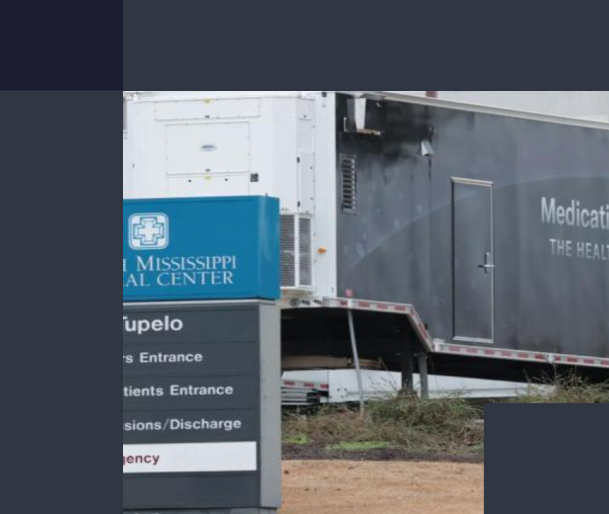
On Demand Pharmaceuticals: cGMP/ USP <800> Mobile Cleanroom
On Demand Pharmaceuticals: cGMP/ USP <800> Mobile Cleanroom

Build or buy? Key considerations for in-house manufacturing
Build or buy? Key considerations for in-house manufacturing

Leveraging Current Technology and Regulatory Frameworks to Deliver Patient Access Today
Leveraging Current Technology and Regulatory Frameworks to Deliver Patient Access Today
Connect with our Arcoplast team
Complete our contact form and a member of our commercial team will reach out to you within 24 hours to discuss Arcoplast.

